The Sensible Environmentalist
Reducing Solid Wood in Landfills
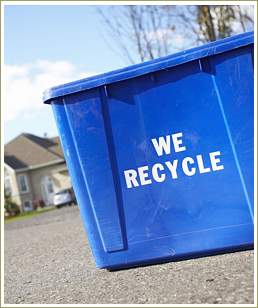 (NAPS)�DEAR DR. MOORE:
My local recycling program
accepts paper, plastics, metal
�everything, it seems, except
wood. Does anyone recycle
wood?
(NAPS)�DEAR DR. MOORE:
My local recycling program
accepts paper, plastics, metal
�everything, it seems, except
wood. Does anyone recycle
wood?
Actually, most
major cities have
wood recycling capability,
though it isn�t
usually part of Blue
Box or other home
pickup programs.
Still, given the
many uses for recovered
wood, far too
much ends up in landfills.
As individuals, we have a role
to play starting with prevention.
For example, proper maintenance
can eliminate the need to replace
wood siding, window frames and
doors by keeping them strong and
weather resistant. You can also
minimize waste from building projects
by using common lumber
dimensions�or by saving leftover
wood for other uses, donating it to
a high school wood shop or bringing
it to a wood recycling facility.
(For facilities nearby, see the
National Wood Recycling Directory
at
www.afandpa.org.)
Solid wood recycling has many
environmental benefits. In addition
to reducing pressure on landfills,
it extends the life of harvested
timber and is yet another
weapon in the fight against global
warming. As trees grow, they
absorb carbon dioxide�a greenhouse
gas thought to be a major
cause of climate change. The carbon
is stored until the wood burns
or decays, thus keeping it out of
the atmosphere.
Given that an estimated
235,000 U.S. homes are destroyed
or converted every year, the construction/
demolition industry generates
a lot of wood waste. However,
there�s an encouraging trend
toward the "deconstruction" of old
buildings instead of the usual
knock-it-down approach. The aim
is to salvage lumber, doors and
other products so they can be used
again. There are downsides, such
as labor costs, but these can often
be overcome, especially since
many structures now being torn
down were built using extremely
high quality timber.
If possible, the best option is to
re-use the wood to create other
valuable products�turning wall
panels into flooring, for example.
If the quality isn�t great, the next
best thing may be to chip the
wood for particleboard or other
composite products. Beyond that,
wood can be mulched for landscaping
or animal bedding, even
burned for energy.
The point is that the life cycle
for wood shouldn�t end after its
initial use. As sensible environmentalists,
we have the opportunity�
and responsibility�to make
better use of our forest resources
through recycling.

 home
home