The Sensible Environmentalist
Protecting Wildlife In America�s Forests
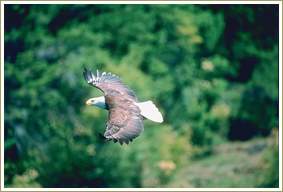 (NAPS)�DEAR DR. MOORE:
Are we doing enough to
protect wildlife habitat in
North American forests?
(NAPS)�DEAR DR. MOORE:
Are we doing enough to
protect wildlife habitat in
North American forests?
There can always be improvement,
but I�m encouraged by the
fact that North America has set
aside a higher percentage
of parks and
other protected
areas than any other
region in the world
(United Nations
FAO 2001). This
land is legally set
aside for current
and future generations and provides
habitat for thousands of
species of wildlife.
Equally important, forest companies
must account for wildlife
as part of their forest management
planning. Sustainable
forestry isn�t just about sustaining
trees, it�s also very much about
sustaining habitat for other plants
and animals.
People are understandably concerned
when activists claim that
species are going extinct. Years
ago, one group made the incredible
statement that 50,000 species
go extinct each year, largely due
to commercial forestry and deforestation
in industrialized countries.
The claim made headlines
around the world, but was completely
unsupportable. As a scientist
working in the field, I couldn�t
find evidence of a single species
going extinct because of forestry.
Apparently the group that made
the statement couldn�t either.
Despite repeated requests, it
couldn�t name even one.
In addition to this lack of evidence,
United Nations data indicated
that commercially grown
forests in North America were
actually expanding by 0.2 percent
each year. Thanks to reforestation,
today�s forests cover roughly
the same area of land as they did
100 years ago.
It�s true that humans have
caused the extinction of many
species, but these tend to fall into
three categories: over-hunting,
introduction of predators and disease
(which happened extensively
during the Colonial period), and
permanent clearing of forested
land for agriculture. The good
news is that we humans have
become increasingly concerned
about our effect on other species,
and the global rate of extinction is
at a 500-year low.
There will always be those who
make false or exaggerated claims
concerning wildlife. I believe that
a sensible environmentalist would
consider the evidence provided
and give credit to the many groups
and individuals that have helped
make North America a leader in
wildlife habitat protection.

 home
home