The Sensible Environmentalist
Recycling Industry Needs Our Help
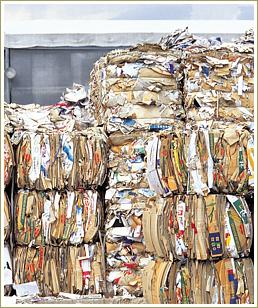 (NAPS)�DEAR DR. MOORE:
How much of the paper
used in the U.S. is recycled?
(NAPS)�DEAR DR. MOORE:
How much of the paper
used in the U.S. is recycled?
According to the American Forest
and Paper Association, the
paper recovery rate hit an all-time
high of 50.3 percent in 2003,
which averages
339 pounds for
each man, woman
and child in the
U.S. More paper is
recovered than all
glass, metal and
other materials
combined�but it
still isn�t enough.
The industry has
set itself a goal of
increasing the waste recovery rate
to 55 percent by 2012, which
translates into an extra 12.5 million
tons of paper collected each
year.
From an environmental perspective,
this is great news. Among
other things, recycling extends the
life of our forest resources, diverts
waste from landfill sites and incinerators,
and reduces energy consumption�
which lowers greenhouse
gas emissions and helps
fight global warming.
It also makes economic sense.
There are more than 56,000 recycling
and re-use facilities nationwide.
The industry employs more
than a million people and tends to
pay higher-than-average salaries.
Some paper products can�t be
recycled, such as soiled pizza
boxes. But we�re still only recycling
half of what we use, so
there�s clearly room to improve.
Despite the fact that the paper
recovery rate has grown steadily
since 1990, the U.S. EPA says the
item most often found in landfills
is still�you guessed it�paper.
Office paper in particular offers a
huge potential increase. The same
is true of paperboard packaging
such as drink containers and
cereal boxes.
The U.S. EPA and the paper
industry have teamed up to educate
and encourage more towns
and cities to recycle, and they�re
also working to increase the recovery
rate in offices and schools.
Ultimately though, it�s up to each
and every one of us to recycle that
stray piece of junk mail or empty
paper towel roll.
We can take pride in the fact
that, over the last 15 years, we�ve
made recycling part of our culture�
and it�s had an impact. We
can also do more. Let�s help the
recycling industry to meet its 55
percent goal, because it makes
sense.

 home
home