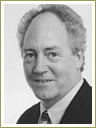
The Sensible Environmentalist
 (NAPS)�DEAR DR. MOORE: What does it take to be a "sensible" environmentalist?
I began calling myself a sensible
environmentalist because I saw the
environmental movement
becoming too
extreme � falling
prey to misguided
priorities and refusing
to evolve beyond
confrontation.
When I helped cofound
Greenpeace,
our goal was to raise alarm. People
were causing harm to this planet
and giving little thought to the environment.
As the first activists, we
used confrontation to make people
notice.
Although there are still important
issues, environmental protection
is now fully entrenched in
North American law. Environmentalists
are consulted and asked to
help shape policy � and that�s
good. But one mark of a sensible
environmentalist is a willingness
to stop shouting at the gates and
come inside, so we can work on
solutions together.
To me, sensible environmentalists
are guided by:
1) Sustainable development �
which, simply put, means balancing
environmental protection with
the social and economic needs of
humans. Six billion people live on
this planet. Any agenda that doesn�t
account for this reality is
impractical.
2) Renewability. Sensible environmentalists
use renewable materials
and energy wherever possible.
This is important and not always
obvious. Unlike many extremists,
I�m a strong proponent of wood use,
providing it comes from sustainably
managed forests.
United Nations data supports
this: forested land is expanding on
continents where people use the
most wood, and shrinking where
people use less. This also supports
my belief that demand for wood in
the market provides incentive to
plant more trees and leads to
greater forest abundance.
3) Sound scientific evidence.
Sensible environmentalists are
sticklers for facts. For example, I
don�t believe in blanket opposition
to genetically modified foods.
World populations are growing and
GM foods help us produce more
food on less land � while reducing
the use of chemical pesticides. This
will save us from having to convert
additional forests to farmland.
The larger environmental groups
do have members that I consider
sensible. They rely on scientific evidence
and work hard to find constructive
solutions to real issues. I
hope these individuals will reclaim
the movement from those whose
priorities are political and have little
to do with the environment.
Someday we can all be sensible
environmentalists.

 home
home